
How to Clean, Descale, and Maintain Every Type of Teapot
A material-by-material protocol to clean, descale, and preserve glass, porcelain, raw Zisha clay, Tokoname stoneware, and cast iron teapots without ruining patina.

Sweese Fluted Glazed Porcelain Teapot
Best for:Effortless daily brewing where non-porous porcelain glaze wipes clean in seconds
Glazed Porcelain · 800 ml (27 oz)
- High-fired non-porous glaze resists deep polyphenol staining
- Wide opening and removable stainless steel basket simplify daily rinsing
- Dishwasher-safe porcelain body handles routine gentle cycles cleanly
Every teapot tells a chemical story on its interior walls. Over weeks of daily steeping, a clear borosilicate glass vessel develops an amber halo along the waterline, a heavy cast iron teapot collects pale chalky mineral flecks around its spout, and an unglazed stoneware pot deepens into a satin sheen. When owners ask how to clean a teapot, the single biggest mistake is treating all five major teapot materials with the same sponge and bottle of dish soap.
A protocol that leaves glazed porcelain sparkling will permanently contaminate raw Yixing clay with detergent perfume, crack the porcelain enamel inside a decorative cast iron pot, or scratch delicate Japanese lacquer. Caring for teaware properly requires matching the chemistry of the residue—either organic tea tannins or inorganic mineral scale—to the physics of the material holding your tea.
The Two Enemies Inside Every Teapot: Polyphenol Stains vs. Mineral Scale
Before reaching for a scrub brush, look closely at the buildup inside your vessel. Nearly every residue inside a brewing pot belongs to one of two chemically opposite categories, and using the wrong cleaner explains why aggressive scrubbing often fails.
1. Polymerized Tea Tannins (The Amber-to-Mahogany Film)
Tea leaves do not stain teapots with dirt; they stain with oxidized polyphenols. During steeping, catechins in green tea and oxidized theaflavins and thearubigins in oolong and black teas bind with dissolved calcium and magnesium ions in your tap water. As the pot cools and dries, those molecules cross-link into a stubborn, water-insoluble calcium-polyphenol biofilm that anchors to microscopic valleys in glass and ceramic glaze.
Standard liquid dish soap is formulated to emulsify dietary fats and cooking oils—not cross-linked polyphenols. That is why scrubbing a brown tea ring with soapy water barely lightens it, whereas an alkaline oxygen lift breaks the pigment apart effortlessly.
2. Hard-Water Limescale (The Chalky White Crust)
If you brew with municipal or well water rich in dissolved calcium bicarbonate, heating drives off carbon dioxide and precipitates solid calcium carbonate and magnesium hydroxide along the bottom and spout throat. This chalky white or gray crust feels gritty under a fingertip and acts like Velcro, trapping fresh tea pigments inside a porous mineral sponge. Alkaline cleaners will not dissolve limescale; you need a controlled weak acid to convert insoluble carbonates back into water-soluble salts.
Clara’s Rule of Thumb: Acid dissolves white mineral scale; oxygen and mild alkali lift dark tea tannins. Never mix baking soda and vinegar together expecting stronger cleaning—they instantly neutralize each other into inert salt water and decorative bubbles. Use them separately for distinct jobs.
At-a-Glance Teapot Care & Cleaning Matrix
Use this quick-reference matrix before applying heat, acid, or abrasion to any vessel in your rotation. If you are still deciding which material suits your kitchen maintenance habits, explore our complete teapot materials comparison.
| Teapot Material | Daily Cleaning | Stain Removal | Scale Removal (Descale) | Soap Allowed? | Dishwasher Safe? |
|---|---|---|---|---|---|
| Borosilicate Glass | Warm water + soft sponge | Sodium percarbonate soak or baking soda paste | Citric acid warm soak | Mild unscented only | Yes (body only; hand-wash lids) |
| Glazed Porcelain | Warm water rinse + air dry | Sodium percarbonate soak or gentle baking soda | Citric acid warm soak | Mild unscented only | Usually (skip gold/metallic trim) |
| Glazed Stoneware | Warm water rinse immediately | Baking soda paste or oxygen soak | Citric acid soak (20 min) | Sparingly on glaze only | Check maker glaze instructions |
| Unglazed Clay (Zisha / Tokoname) | Boiling water rinse only | Do not strip patina (tea seasoning is desired) | Never acid-descale (etches mineral clay) | Never (absorbs soap) | Never |
| Enamel-Lined Cast Iron | Warm water rinse + towel dry | Gentle baking soda paste on cloth (no metal scrub) | Avoid harsh acids; soft damp wipe | Never | Never |
| Raw Unlined Tetsubin Kettle | Empty hot + residual-heat dry | Leave protective mineral-tannin coat intact | Do not strip white yuaka scale | Never | Never |
Essential Teapot Apothecary Kit (What to Keep by the Sink)
You do not need harsh chemical degreasers, chlorine bleach, or steel wool to keep a teapot immaculate. Four inexpensive pantry-safe staples cover every safe maintenance scenario:
- Food-Grade Citric Acid Crystals: Odorless, stable, and far cleaner than vinegar for descaling glass, porcelain, and stainless infusers.
- Pure Sodium Percarbonate (Oxygen Cleaner): Unscented oxygen bleach granules dissolve polymerized tea tannins inside curved spouts and fine mesh without friction.
- Baking Soda (Sodium Bicarbonate): With a gentle Mohs hardness around 2.5, baking soda creates a safe polishing paste that lifts glaze stains without scratching borosilicate glass or ceramic.
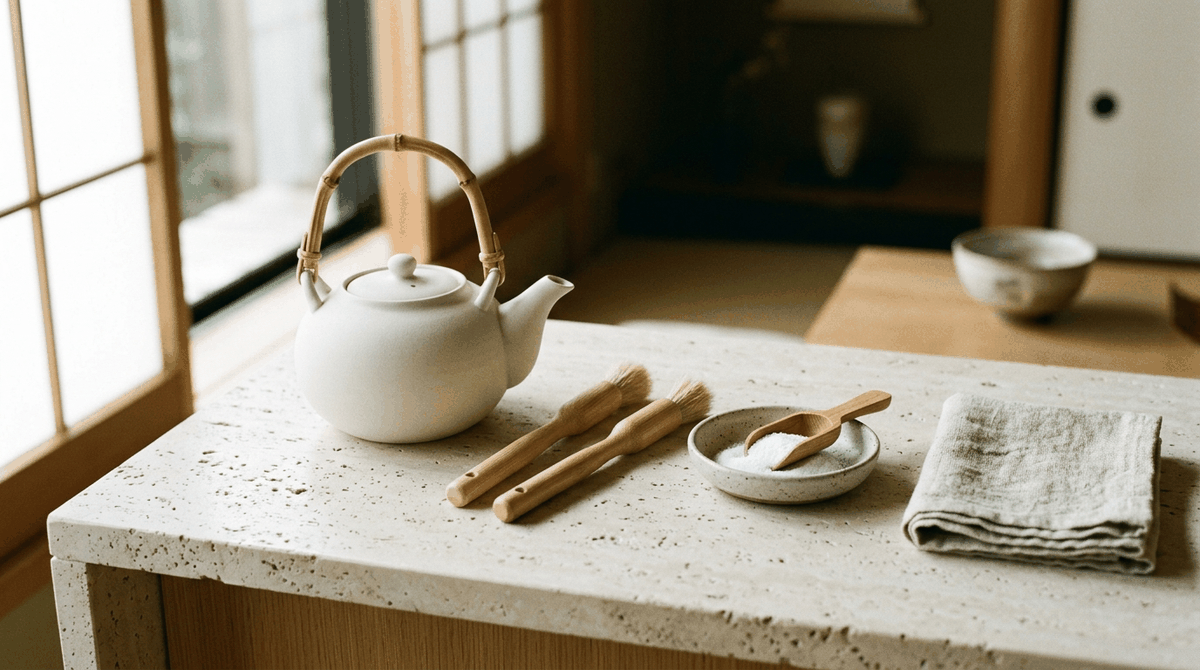
- Dedicated Bamboo & Nylon Spout Brushes + Linen Towel: One narrow bottle/spout brush reserved strictly for tea (never used on greasy pans) plus a lint-free linen cloth for buffing cast iron and porcelain dry.
Step-by-Step Protocols by Teapot Material
1. Borosilicate Glass & Glazed Porcelain (High-Clarity Daily Brewers)
Non-porous vitrified materials—like thermal-shock-resistant glass and high-fired glazed porcelain—are the easiest vessels to keep spotless because tea polyphenols sit purely on the surface rather than penetrating the body.
Daily Routine:
- Discard spent leaves within 30 minutes of finishing your session. Leaving wet leaves sitting in tepid water accelerates tannin polymerization and invites mold.
- Rinse the pot and infuser basket thoroughly under warm running water.
- Invert the pot on a breathable dish rack or linen mat, leaving the lid off until completely dry.
Weekly or Monthly Deep Clean: If your glass or porcelain teapot already wears a stubborn mahogany ring or cloudy limescale film, learning how to remove tea stains gently makes upkeep effortless: follow our dedicated 15-minute oxygen-soak and citric-acid protocol in our natural glass and porcelain stain-removal guide. Never plunge a hot glass pot directly into cold sink water, and keep chlorine bleach out of the kitchen—bleach degrades silicone lid gaskets and leaves persistent chloramine odors in fine infuser seams.
2. Unglazed Yixing Zisha & Tokoname Stoneware (Living Clay)
Unglazed purple zisha clay from Yixing and iron-rich shudei stoneware from Tokoname are prized precisely because their sintered clay walls retain microscopic open pores. Over dozens of brews, those pores round off astringency and nurture a soft inner sheen known in gongfu culture as yang hu (nurturing the pot). Treating unglazed clay like a glass mug destroys decades of potential character in five minutes.
Strict Unglazed Clay Protocol:
- Zero Surfactants, Zero Acids: Never introduce dish soap, baking soda, citric acid, vinegar, or oxygen cleaners. Soap penetrates capillary pores and ruins future brews; acid etches clay minerals and creates chalky pits.
- Post-Session Flush: Dump leaves immediately using a wooden tea pick or soft bamboo brush—never bang a metal spoon against thin stoneware walls.
- Boiling-Water Rinse: Pour fresh hot or boiling water inside, swirl vigorously, empty through both the main mouth and the spout, and repeat once.
- Dry With Lid Off: Set the body and lid separately on a slatted bamboo tray or absorbent cotton cloth until bone dry. Storing an unglazed pot sealed while slightly damp is the leading cause of musty odor.
Emergency Reset for Neglected or Moldy Clay: Bought a vintage Tokoname kyusu that smells musty or accidentally touched soap? Place the empty pot and lid gently into a clean stainless saucepan, submerge completely in cold filtered water (never drop cool clay straight into boiling water), bring slowly to a gentle simmer for 15 minutes, then allow the pot to cool naturally inside the water before air-drying for 48 hours. This thermally safe boil expands pores cleanly without chemical residue.
3. Cast Iron Teapots & Raw Nanbu Tekki Tetsubin
Knowing how to clean cast iron teapot interiors without stripping their protection begins with one urgent question: Is the inside lined with dark shiny enamel, or is it bare textured gray iron?
- Enamel-Lined Cast Iron Teapots (Tetsu Kyusu): Almost all modern decorative hobnail teapots featuring removable mesh baskets are lined with smooth porcelain enamel. Never season them with cooking oil, never put them over a direct stove burner, and never scrub the enamel with metallic pads. Rinse immediately with warm water, wipe the exterior dry while warm, and store uncovered until dry.
- Raw Unlined Tetsubin Kettles: True Japanese water-boiling kettles have bare cast iron interiors designed to build a protective mineral-oxide skin (yuaka) and mild tea-tannin passivation. Never scrub away internal white scale or gray oxidation unless bright orange flaky rust appears.
If you spot rust along a spout lip, lid rim, or inside a raw kettle, follow our step-by-step cast iron teapot seasoning and tannin rust-neutralizing guide to convert reactive orange oxide into stable black iron tannate.
4. Stainless Steel Mesh & Laser-Etched Infuser Baskets
Even if your teapot body stays gleaming, a clogged infuser ruins extraction dynamics and causes awkward spout dribble by restricting water flow.
- Tap spent leaves gently into compost without bending ultra-fine mesh.
- Once every two weeks, drop your stainless basket into a heatproof bowl with half a teaspoon of sodium percarbonate and 400ml of hot water (about 70°C / 158°F).
- Wait 10 minutes as micro-bubbles lift sticky green-tea catechins and dust particles from every pinhole.
- Rinse briskly from the outside inward under strong tap water pressure to push loosened particles clear of the screen.
How to Descale a Teapot Safely (Citric Acid vs. Vinegar)
Hard-water buildup dims borosilicate glass, slows pouring through internal ceramic ball filters (sasame), and harbors stale odors. Learning to descale teapot interiors gently keeps water flowing evenly and flavors crisp.
The Odorless Citric Acid Descale Protocol
- Measure the Ratio: Add 1 level tablespoon (about 15g) of food-grade citric acid crystals per 500ml of warm-to-hot water (around 60°C–70°C / 140°F–158°F). For heavy scale inside a 1-liter pot, double the water and acid proportionally.
- Dissolve and Swirl: Stir with a wooden spoon until crystals vanish, ensuring the solution coats the lower spout opening as well.
- Wait 20 Minutes: Allow citrate chelation to break down chalky calcium carbonate bonds quietly—you may see tiny carbon dioxide pin-bubbles rising from heavy scale patches.
- Brush and Inspect: Swirl with a soft bottle brush or sponge. If stubborn scale ridges persist in a glass kettle-teapot, repeat once with fresh warm citric solution rather than scraping with metal.
- Double Rinse: Empty completely and rinse twice with hot filtered water so no tart acidity remains to curdle milk or sour delicate oolongs.
Why Avoid White Vinegar? While diluted vinegar works chemically via acetic acid, its sharp odor lingers stubbornly inside rubber rings, plastic handles, and ceramic strainers. Citric acid delivers superior calcium chelation with zero smell. (Reminder: never run acidic descalers inside unglazed clay or raw mineral-seasoned tetsubin unless deliberately stripping scale before reconditioning.)
Daily Habits That Cut Deep Cleaning in Half
Most stubborn teapot stains do not come from drinking tea—they come from over-steeping leaves and abandoning spent pots overnight.
- Time Every Steep Precisely: Leaving black or green tea leaves steeping past their sweet spot forces dense, bitter polyphenols into solution that coat pot walls rapidly. Use our interactive tea steeping timer to pull your infuser at peak sweetness—better flavor in your cup also means half the residue on your walls.
- Pre-Warm With Hot Water: Swirling warm water inside porcelain or ceramic before adding leaves rinses dust and moderates thermal shock.
- Empty Immediately After Pouring: If you plan to re-steep oolong or pu-erh leaves later in the afternoon, lift the lid off between infusions so leaves cool and dry slightly rather than stewing in stagnant hot water.
- Store With Breathing Room: Never snap a damp lid closed inside a dark cupboard; leave lids resting crooked or placed beside the pot for airflow.
Low-Maintenance Teapots Built for Effortless Care
If scrubbing narrow spouts or pampering porous clay feels exhausting on busy weekday mornings, choosing a teapot engineered for effortless sanitation makes daily loose-leaf brewing genuinely relaxing. These two curator favorites from our teapot gallery earn top marks for hygiene and clean daily care:
- Sweese Fluted Glazed Porcelain Teapot: Fired with a dense, glass-smooth glaze that repels heavy black-tea tannins, this budget-friendly 800ml daily driver opens wide enough for an entire hand and sponge—and the porcelain vessel can slip right onto the top dishwasher rack on busy evenings.
- Zero Japan Universal Beehouse Artisan Ceramic Teapot: Built in Mino, Japan, its signature stainless steel lid unclips completely in one motion, exposing the entire interior rim and pouring lip for effortless cleaning and dishwasher convenience without awkward crevices.
Looking to match your care routine to a new vessel style? Browse our curated teapot design showcase or compare thermal retention and pour mechanics side by side in our teapot materials comparison guide.
Hands-On Benchmarks
Tested Picks & Recommendations
Sweese Fluted Glazed Porcelain Teapot
Glazed Porcelain · 800 ml (27 oz)
Best ForEffortless daily brewing where non-porous porcelain glaze wipes clean in seconds
What We Loved
- High-fired non-porous glaze resists deep polyphenol staining
- Wide opening and removable stainless steel basket simplify daily rinsing
- Dishwasher-safe porcelain body handles routine gentle cycles cleanly
Trade-offs
- Fluted exterior grooves require wiping dry to prevent water spots
- Heavier wall thickness than borosilicate glass vessels
Zero Japan Universal Beehouse Artisan Ceramic Teapot
Ceramic & Stoneware · 450 ml (15.2 oz)
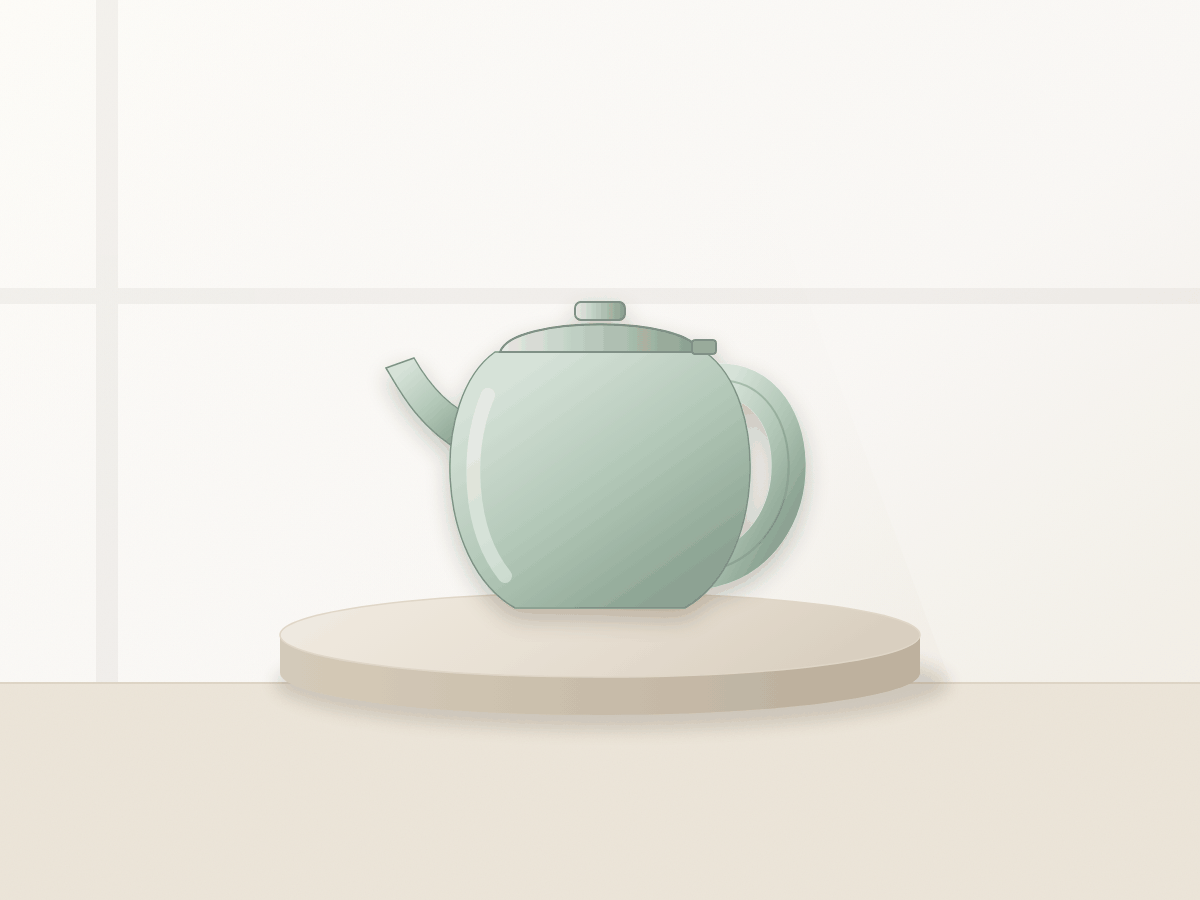
Best ForPrecision pouring and hygienic care with a detachable stainless lid and basket
What We Loved
- Hinged stainless steel lid clips off completely for deep spout and rim access
- Lead-free Mino-ware ceramic glaze stays bright without retaining old tea aromas
- Precision-shaped spout cuts cleanly without dribbling down the pot wall
Trade-offs
- Detachable steel lid must be hand-dried to avoid hinge water spots
- 450ml capacity is suited for one to two drinkers rather than large gatherings
Frequently Asked Questions
Should I use white vinegar or citric acid to descale a teapot?
Food-grade citric acid is almost always superior to distilled white vinegar for descaling teapots. Citric acid is odorless, chelates calcium and magnesium ions cleanly into soluble citrate complexes, and leaves zero lingering sour smell inside silicone gaskets, spouts, or strainers. White vinegar works in a pinch for glass and porcelain, but its volatile acetic acid fumes can cling to micro-textures and dull delicate white or green teas for several subsequent infusions.
Can you put a teapot in the dishwasher?
Only plain borosilicate glass, undecorated high-fired glazed porcelain, and solid stainless steel infusers belong in a dishwasher—and even then, placement on the top rack away from harsh powdered detergents is essential. Never put unglazed Yixing Zisha clay, Tokoname stoneware, cast iron teapots, bamboo-handled vessels, or gold-rimmed antique porcelain in a dishwasher. Dishwashing detergents leave bitter surfactants inside porous clay, crack cast iron enamel through thermal shock, and strip metallic luster.
Why shouldn't I use dish soap on unglazed clay teapots?
Unglazed clay vessels such as Yixing Zisha and Tokoname shudei rely on microscopic sintered pores that absorb trace aromatic tea oils over years of brewing. Liquid dish soap contains synthetic surfactants, fragrance compounds, and degreasers that wick deep into those capillaries. Once trapped, soapy residues cannot be rinsed away easily and will taint every future infusion with a chemical aftertaste while stripping the prized patina.
How do I remove dark brown tea stains from inside a teapot without bleach?
Dissolve one teaspoon of food-grade sodium percarbonate (pure oxygen cleaner) into 500ml of hot water around 65°C (150°F), pour it into a glass or glazed ceramic teapot, and soak for 15 to 20 minutes. Sodium percarbonate releases active hydrogen peroxide and mild soda ash, breaking down polymerized tea tannins (thearubigins) on contact without scrubbing or chlorine odor. Rinse thoroughly with hot water afterward.
How do you clean a cast iron teapot without causing inside rust?
Rinse an enamel-lined cast iron teapot with plain warm water immediately after brewing—never use dish soap, scouring pads, or a dishwasher. Pour out spent leaves right away, wipe the exterior dry with a soft linen towel while the iron is still warm, and leave the lid off for 15 minutes so residual heat evaporates every drop of moisture along the rim and spout.
Care & Physics
Related Guides in This Cluster

Can You Put a Glass Teapot on an Electric or Gas Stove Safely?
Safety guide to heating borosilicate glass teapots on gas, electric coil, glass-ceramic, and induction cooktops—avoiding thermal shock and shatter risks.
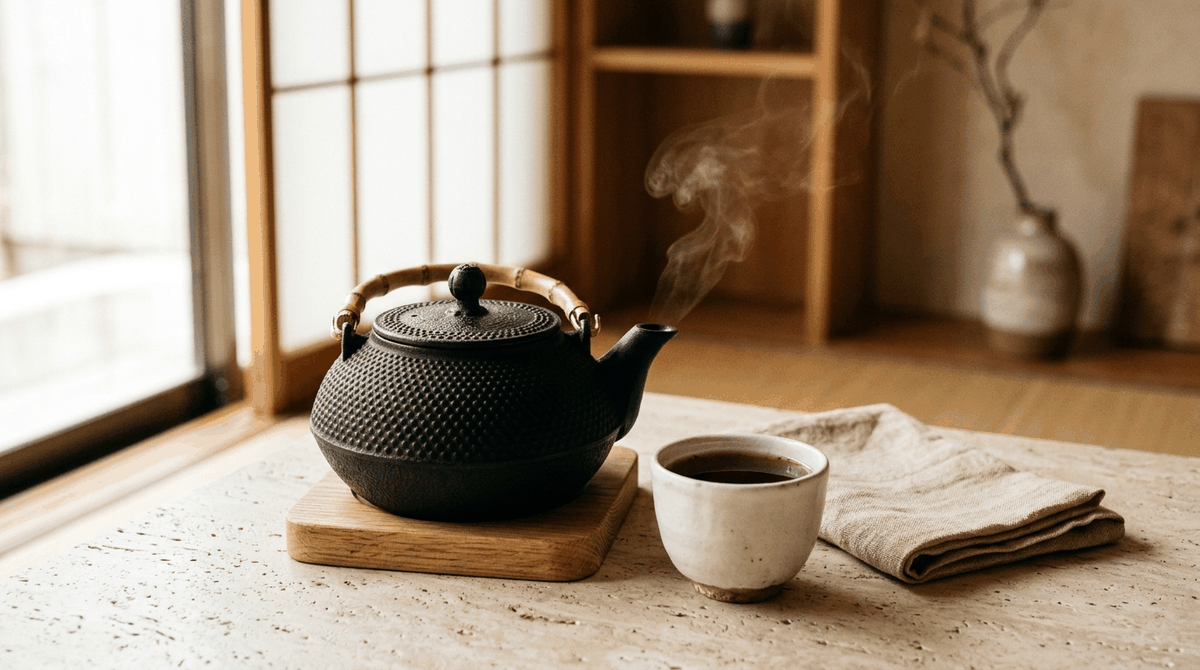
How to Season a Cast Iron Teapot (And Prevent Inside Rust)
Learn how to season raw Nanbu Tekki tetsubin kettles versus enamel-lined cast iron teapots, neutralize flash rust with green tea tannins, and dry properly.

How to Remove Stubborn Tea Stains from Glass & Porcelain Teapots Naturally
Dissolve polymerized tea tannins (thearubigins) from glass and glazed ceramic teapots in 15 minutes using sodium percarbonate, baking soda, or citric acid—no bleach.