
How to Season a Cast Iron Teapot (And Prevent Inside Rust)
Learn how to season raw Nanbu Tekki tetsubin kettles versus enamel-lined cast iron teapots, neutralize flash rust with green tea tannins, and dry properly.
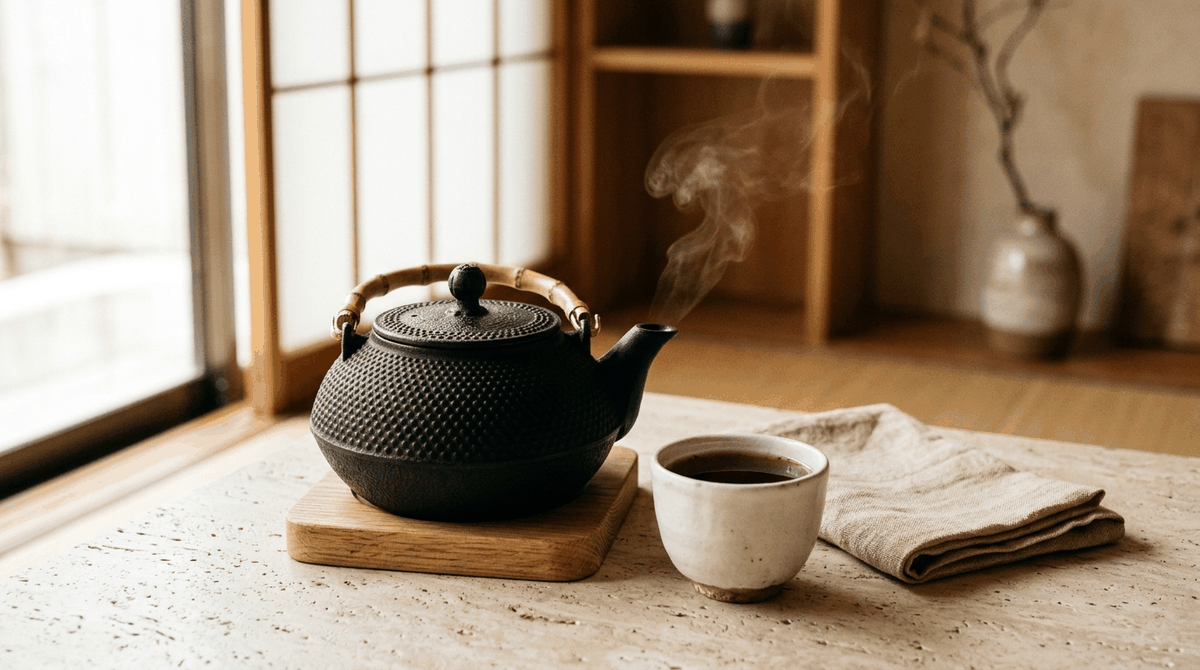
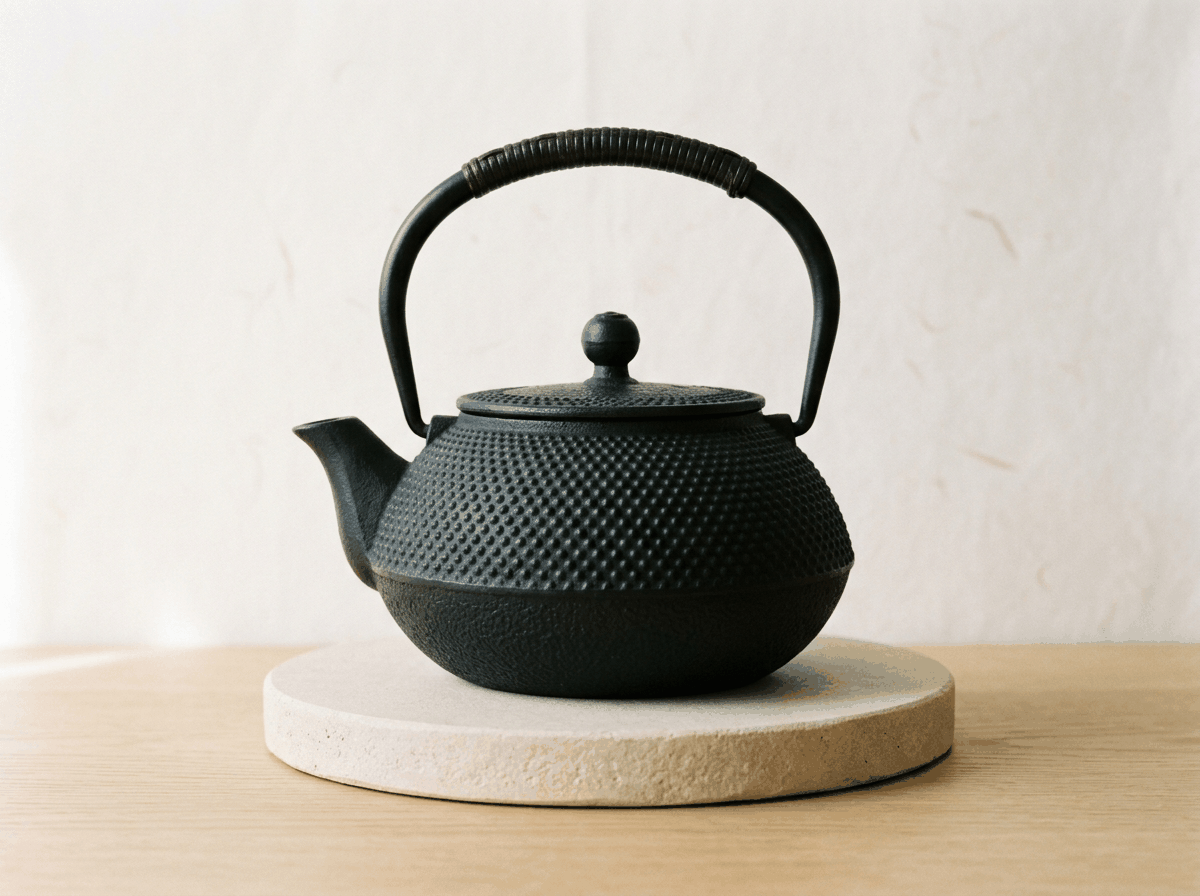
Iwachu Nanbu Tekki Arare Cast Iron Teapot
Best for:Heirloom daily brewing with superior thermal retention and smooth enamel interior
Cast Iron · 650 ml (22 oz)
- Sand-cast in Morioka, Japan following authentic Nanbu Tekki foundry standards
- Vitrified porcelain-enamel lining resists inside rust and wipes clean quickly
- Crisply cast spout pours smoothly with zero splash and minimal drip
Few pieces of teaware command the table quite like a heavy hobnail cast iron teapot. Retaining heat far longer than glass and lending unmistakable ritual weight to every pour, Japanese Nanbu Tekki ironware feels indestructible in your hand. Yet one well-meaning mistake—treating it like a cast iron frying pan—ruins more iron teapots every year than drops onto kitchen tile.
If you have searched how to clean cast iron teapot interiors or wondered how to season cast iron teapot metal without creating an oily mess, you have likely already encountered conflicting kitchen myths. Rubbing flaxseed oil inside a brewing vessel leaves rancid slicks floating on your oolong, while boiling water over a gas flame in an enameled pot fractures its glass lining. Understanding real cast iron teapot care starts by identifying which of two completely different vessels sits on your counter.
Enamel-Lined Teapot vs. Raw Tetsubin Kettle: Know Your Interior First
Before touching water, brushes, or heat, remove the lid and shine a flashlight down into the chamber. Visually diagnosing the interior wall prevents 95 percent of avoidable damage, as covered in our complete teapot care guide.
| Feature | Enamel-Lined Cast Iron Teapot (Tetsu Kyusu) | Raw Unlined Tetsubin Kettle |
|---|---|---|
| Interior Appearance | Smooth, uniform matte or satin black glass coating | Bare, faintly granular charcoal-gray metallic iron |
| Primary Purpose | Steeping tea using water heated in a separate kettle | Boiling water directly (rarely used for steeping leaves) |
| Included Basket | Almost always includes a removable mesh infuser | No infuser basket inside |
| Stovetop Safe? | No. Direct burner heat cracks porcelain enamel | Yes. Safe over low-to-medium gas, charcoal, or radiant coils |
| Seasoning Method | None required internally (already glass-sealed) | Mineral scale (yuaka) + green tea tannin passivation |
| Where Rust Appears | Rim lip, lid edge, spout tip, or damaged enamel pinholes | Entire interior if left wet without warm-air evaporation |
Traditional Japanese craftsmanship from Morioka in Iwate Prefecture clearly separates these two vessels. Historic tetsubin teapot kettles (strictly speaking, tetsubin means iron water kettle) evolved alongside 18th-century sencha culture to boil plain spring water, releasing trace bioavailable ferrous ions that gently sweeten the liquor. Modern Western-market cast iron teapots sold with stainless mesh baskets are almost exclusively tetsu kyusu—iron brewing pots lined with vitrified porcelain enamel so black, green, and herbal teas never turn harsh or dark from excess iron reaction.
Why You Must Never Season a Cast Iron Teapot with Cooking Oil
Online forums routinely tell owners to coat their teapot interior in vegetable oil and bake it in an oven. Please resist that advice completely.
Cast iron skillets rely on lipid polymerization: heating unsaturated fats past their smoke point (around 450°F / 232°C) to cross-link fatty acids into a hard, hydrophobic carbon matrix suited for frying eggs. Inside a teapot, oil seasoning fails on three fronts:
- Enamel Already Seals the Pot: In an enameled tetsu kyusu, oil cannot bond to smooth glass porcelain anyway; baking oil inside merely creates a sticky varnish that flakes into hot water.
- Boiling Water Attacks Polymerized Oil: Even on raw cast iron, repeated 100°C (212°F) simmering plus tea polyphenols hydrolyzes thin oil layers, lifting greasy micro-droplets straight onto the surface of your tea and flattening bright top-note aromatics.
- Rapid Rancidity: Any unpolymerized oil tucked inside the spout throat or under the rim turns rancid within weeks, tainting delicate white or Japanese sencha leaves with stale fryer notes.
True iron teaware seasoning relies on minerals and tea tannins, never kitchen fats.
How to Season a Raw Unlined Tetsubin Kettle (The Mineral & Tannin Method)
If you own an authentic, unlined raw tetsubin kettle with bare iron inside, your initial “seasoning” builds a microscopic mineral shield called yuaka (literally “kettle scale”) alongside optional polyphenol passivation.
Step 1: Perform a Plain-Water Conditioning Boil
Fill the raw kettle about 80 percent full with clean, moderately mineralized spring or filtered tap water—avoid distilled or reverse-osmosis water for initial seasoning, because dissolved calcium and magnesium bicarbonates are the building blocks of yuaka. Bring the kettle gently to a simmer over medium-low heat (never blast a cold iron kettle on maximum high flame) and let it simmer uncovered for 20 minutes.
Step 2: Pour Out and Air-Dry via Residual Heat
Pour out the water completely while hot. Set the kettle empty back onto an oak trivet with the lid removed. Because cast iron retains tremendous thermal mass, the hot walls evaporate every remaining droplet of moisture within two to three minutes—never wipe inside a seasoned raw kettle with paper towels or abrasives.
Step 3: Repeat Three Times Before Daily Use
Repeat this boil-and-dry cycle two or three times over your first couple of days. Soon you will notice a faint chalky pale-gray mineral blush forming across the bottom and lower sides. That mineral skin protects raw iron from rapid oxidation while softening water mouthfeel for sweeter infusions.
Clara’s Curator Tip: Never descale a raw unlined tetsubin with citric acid or vinegar unless you are stripping heavy flaky corrosion before restarting from bare metal. That pale white interior mineral crust is your kettle’s functional armor.
How to Clean a Cast Iron Teapot Daily (Without Stripping Protection)
Whether your vessel is an heirloom raw kettle or an enameled daily brewer, learning how to clean cast iron teapot exteriors and interiors properly comes down to gentle water temperature and immediate drying.
1. Discard Spent Leaves Immediately
Do not leave wet tea leaves resting inside an enameled cast iron pot for hours after finishing your pot. Prolonged lukewarm moisture creeps upward along the unglazed rim flange where the lid rests—the exact junction where cast iron develops its first orange specks.
2. Rinse With Warm Plain Water Only
Remove the stainless mesh basket and rinse the teapot body thoroughly using warm running water (never plunge scorching hot iron under ice-cold tap water, which risks thermal shock to porcelain enamel). Swirl gently and pour out through the spout to clear stray leaf fragments. Skip dish soap entirely: even mild detergent is unnecessary on smooth enamel and ruins raw iron seasoning.
3. Dry the Exterior and Rim While Warm
Wring excess moisture from a clean linen towel and thoroughly dry the outer hobnail bumps (arare), handle mounts, spout lip, and top rim while the iron still feels warm to the touch. If tiny specks of tea cling to the lip, wipe gently with your damp cloth—never scour the exterior matte black urushi or baked lacquer finish with green abrasive pads.
4. Leave the Lid Off to Evaporate Residual Moisture
Set the empty pot uncovered on a counter mat for 15 to 20 minutes before replacing the lid or tucking it into a cabinet. Trapping steam inside a closed iron pot guarantees condensation droplets along the lid groove overnight. If you want an easy visual check of steep times so you pull leaves cleanly before tannins turn heavy, keep our interactive tea steeping timer pinned during morning sessions.
How to Remove Rust from a Cast Iron Teapot & Neutralize with Tea Tannins
Spotted orange-red streaks along your teapot rim, inside a raw tetsubin, or around an accidental chip in older enamel? Do not panic—and do not throw the teapot away. Minor surface rust on cast iron is simply hydrated iron(III) oxide, and tea itself contains the exact chemical antidote.
Step 1: Clear Only Loose Flaky Rust
Wait until the teapot is cool and dry. Using a soft-bristle dry toothbrush or folded natural cloth, gently sweep away powdery orange flakes from the rusted spot.
- On an enameled pot: Stop immediately once loose dust lifts—never attack enamel pinholes with wire brushes or sandpaper, which widen the chip.
- On a raw unlined tetsubin: Lightly buff severe crusty patches with a soft Scotch-Brite sponge dipped only in water, leaving undisturbed gray metal intact.
Step 2: Run the Green Tea Tannin Passivation Bath
Take two to three heaping tablespoons of inexpensive loose-leaf green tea (such as Japanese bancha, kukicha, or basic sencha—high in raw catechins) and place them directly into the pot or inside its wide infuser basket.
- For an unlined raw tetsubin: Fill 80 percent full with clean water, bring to a gentle simmer for 20 minutes on low heat, then turn off heat and let it steep undisturbed for 1 hour (or until warm).
- For an enamel-lined cast iron teapot with rim or pinhole rust: Fill completely to the upper rim with boiling water from your kettle over the green tea leaves, rest the lid gently atop the leaves so tannins wet the rim flange, and steep for 30 to 45 minutes (do not place on a stove burner).
The Chemistry Behind the Magic
As high-catechin green tea steeps over bare iron oxide, polyphenolic compounds (epigallocatechin gallate and gallic acid) chelate reactive ferric ions, converting powdery orange rust into insoluble, tightly adhered blue-black iron tannate (ferric tannate). You will literally watch orange spots darken to deep slate-black.
Step 3: Empty, Rinse, and Boil-Test
Pour out the dark spent tea solution (do not drink this restorative bath; it tastes strongly of iron). Rinse thoroughly with hot water until clear, then fill once with fresh boiling water, swirl, and taste a small spoonful once cool enough to sip. Clean, sweet water with zero metallic tang confirms your passivation layer worked. Dry the pot thoroughly using residual warmth.
(Need to brighten a stained glass or ceramic vessel instead of cast iron? Jump over to our dedicated glass and porcelain tea stain guide.)
Cast Iron Teapot Care Mistakes That Void Longevity
Even high-craft foundries see avoidable returns caused by four common kitchen habits:
- Using an Enameled Teapot on Induction or Gas Burners: Induction coils heat iron ferromagnetically at blistering speed, causing bare iron and bonded porcelain enamel to expand at mismatched rates. Within a few boils, hairline craze fractures spiderweb across the floor, opening pathways for deep under-enamel rust. Use a dedicated kettle or check our teapot materials comparison if you need direct-heat brewing options.
- Pouring Cold Water Into a Hot Pot: Thermal shock weakens enamel bonding and stresses thin cast spout joints. Always temper an iron teapot with warm tap water before pouring 100°C boiling water for black tea.
- Soaking Overnight in Dishwater: Submerging a cast iron teapot softens decorative lacquer finishes, traps water beneath wire handle hinges, and triggers creeping rust around the lid seat.
- Scrubbing the Exterior Hobnail Pattern: Traditional textured arare dots are coated with protective baked-on lacquer or traditional urushi paint. Harsh detergents or abrasive pads strip the satin black sheen down to gray iron. Buff gently with a dry cloth—never oil-shine it until greasy, though a faint pass with a cloth dampened by brewed black tea restores rich matte depth cleanly.
Choosing a Well-Crafted Cast Iron Teapot
A thoughtfully cast pot with uniform enamel coverage and crisp rim machining makes cast iron teapot care practically effortless from day one. Two standout designs featured in our curated teapot gallery show how foundry precision pays dividends at the sink:
- Iwachu Nanbu Tekki Arare Cast Iron Teapot: Cast in Morioka by one of Japan’s most respected heritage foundries, Iwachu’s classic 650ml hobnail pot features remarkably even vitrified interior enamel, tight lid tolerances that minimize steam drip, and a razor-clean spout cutoff that leaves zero tea dribbling down the outer iron body.
- Old Dutch International Sapporo Cast Iron Teapot: A dependable mid-range 750ml workhorse finished with smooth interior porcelain enamel and an oversized stainless basket—ideal for relaxed multi-cup afternoon sessions when dried carefully along its wide rim after pouring.
When paired with clean boiled water, an unhurried dry-down routine, and an occasional green tea tannin bath when needed, good cast iron outlasts decades of daily steeps—growing richer in character with every pot you pour.
Hands-On Benchmarks
Tested Picks & Recommendations
Iwachu Nanbu Tekki Arare Cast Iron Teapot
Cast Iron · 650 ml (22 oz)
Best ForHeirloom daily brewing with superior thermal retention and smooth enamel interior
What We Loved
- Sand-cast in Morioka, Japan following authentic Nanbu Tekki foundry standards
- Vitrified porcelain-enamel lining resists inside rust and wipes clean quickly
- Crisply cast spout pours smoothly with zero splash and minimal drip
Trade-offs
- Porcelain-enamel lining prohibits direct stovetop flames or induction burners
- Substantial iron wall weight requires steady two-handed pouring when full
Old Dutch International Sapporo Cast Iron Teapot
Cast Iron · 950 ml (32 oz)
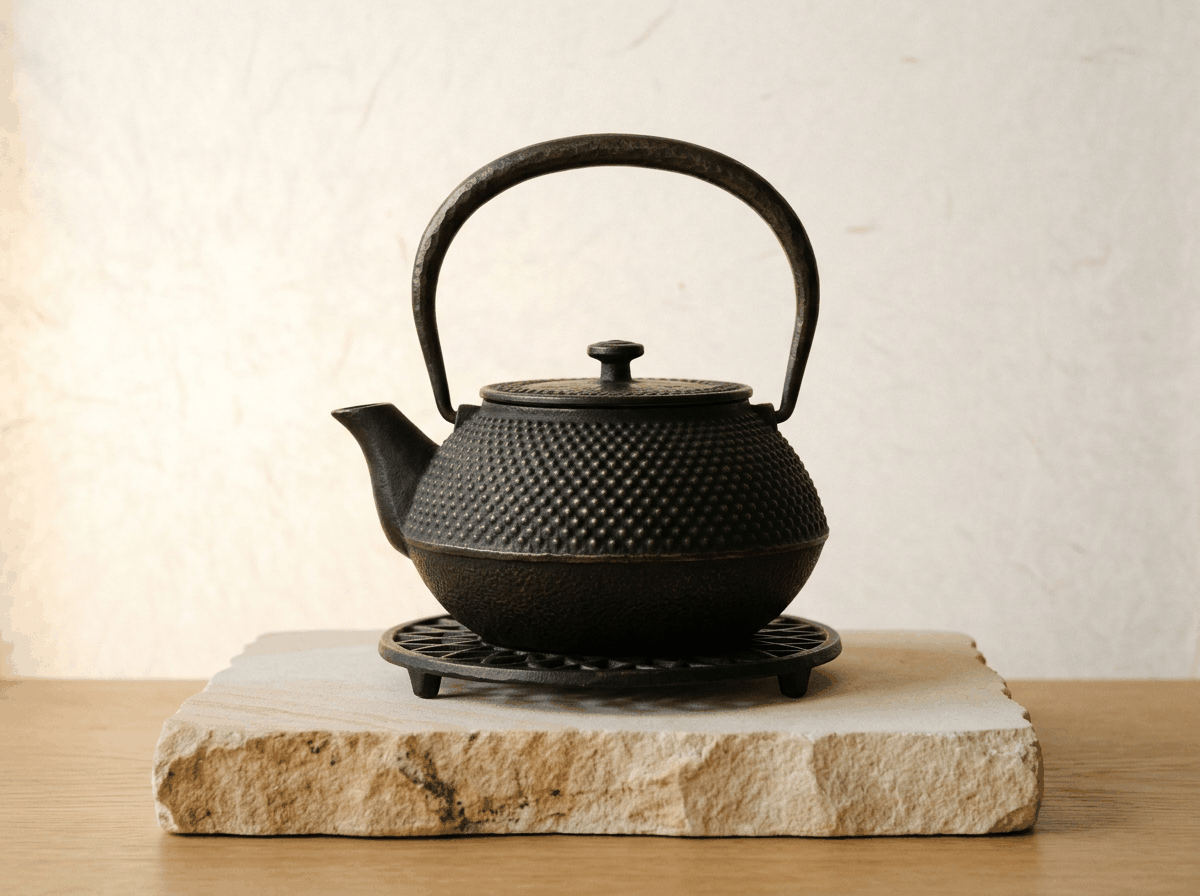
Best ForMulti-cup black and oolong service with forgiving enamel care
What We Loved
- Smooth porcelain interior simplifies warm-water rinsing and stops metallic flavor
- Generous stainless mesh infuser lets large rolled oolong leaves unfurl freely
- Approachable mid-tier craft option with timeless arare hobnail texture
Trade-offs
- Never safe for direct stovetop boiling due to interior enamel expansion limits
- Uncoated rim flange still needs attentive towel drying after every pour
Frequently Asked Questions
How do I fix rust inside a cast iron teapot safely?
First gently lift away loose orange flakes with a soft dry cloth or gentle nylon brush—never steel wool on enameled pots. Next, simmer or steep inexpensive loose-leaf green tea inside the pot for 20 minutes. Tea catechins and gallic acid react chemically with orange iron(III) oxide to form stable, inert black iron tannate that seals exposed metal and removes metallic taste. Empty while hot and air-dry completely with the lid off.
What is iron tannate blackening, and is it safe to drink from?
Iron tannate (ferric tannate) is an insoluble blue-black mineral-polyphenol complex created when natural green tea tannins bind to oxidized surface iron. Traditional Japanese tetsubin artisans have relied on this exact chemical reaction for centuries to passivate raw cast iron. Once loose orange rust is neutralized into tightly bonded black iron tannate and rinsed clear, it is completely food-safe and imparts no harsh metallic flavor.
What is the difference between an enamel-lined cast iron teapot and a raw tetsubin?
A true raw tetsubin is an unlined cast iron kettle designed strictly to boil plain water over charcoal, gas, or radiant heat; it builds a white mineral scale lining over time and never receives soap or oil. An enamel-lined cast iron teapot (tetsu kyusu) has a glossy black porcelain-glass interior and removable infuser basket meant solely for steeping tea with preheated kettle water—never for stovetop boiling.
Can I put my cast iron teapot directly on a stove burner or induction cooktop?
Only if you have verified with 100 percent certainty that your vessel is an unlined raw tetsubin kettle with zero interior porcelain coating. Putting an enamel-lined cast iron teapot onto a gas flame, electric coil, or induction burner causes uneven thermal expansion between the iron shell and glass glaze, cracking or crazing the interior enamel permanently.
Should I season a cast iron teapot with vegetable oil like a skillet?
Never coat the inside of any cast iron teapot or tetsubin with cooking oil, flaxseed oil, or butter. Unlike a dry frying pan baked at 450°F, a teapot holds boiling water, which keeps unpolymerized or lightly cured lipids sticky, creates rancid oil slicks on your tea, and obliterates delicate floral aromatics. Only raw iron exteriors occasionally receive a trace dry-buffed coat of tea-infused cloth—never the interior brewing chamber.
Care & Physics
Related Guides in This Cluster
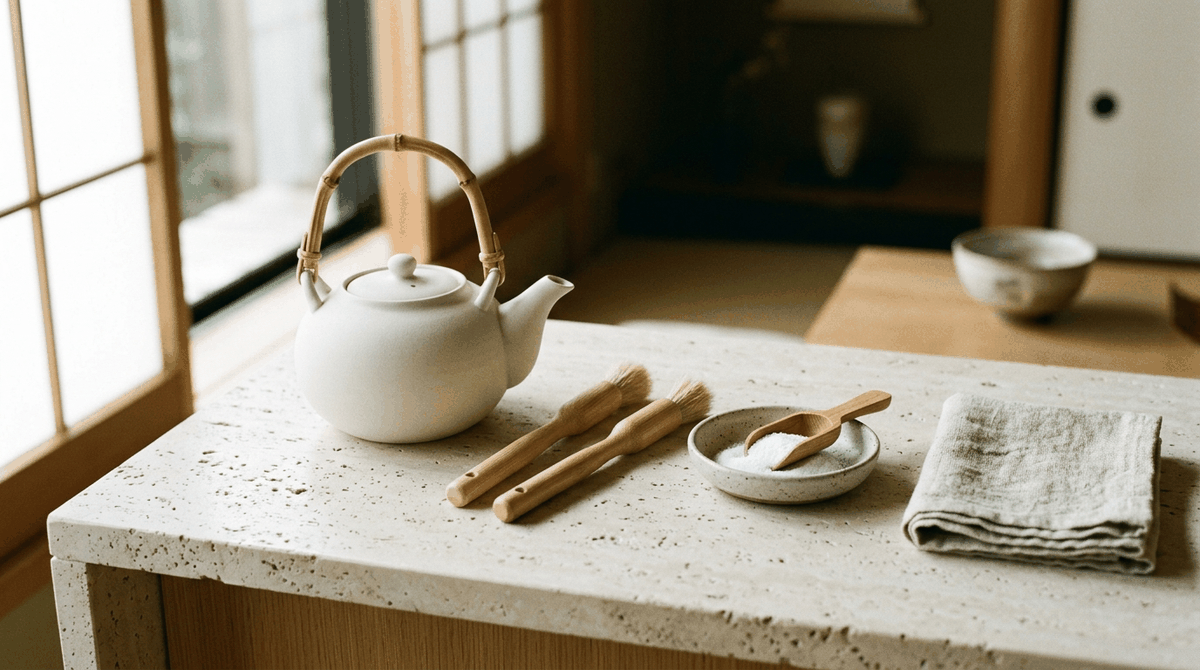
How to Clean, Descale, and Maintain Every Type of Teapot
A material-by-material protocol to clean, descale, and preserve glass, porcelain, raw Zisha clay, Tokoname stoneware, and cast iron teapots without ruining patina.

Can You Put a Glass Teapot on an Electric or Gas Stove Safely?
Safety guide to heating borosilicate glass teapots on gas, electric coil, glass-ceramic, and induction cooktops—avoiding thermal shock and shatter risks.
How to Remove Stubborn Tea Stains from Glass & Porcelain Teapots Naturally
Dissolve polymerized tea tannins (thearubigins) from glass and glazed ceramic teapots in 15 minutes using sodium percarbonate, baking soda, or citric acid—no bleach.